
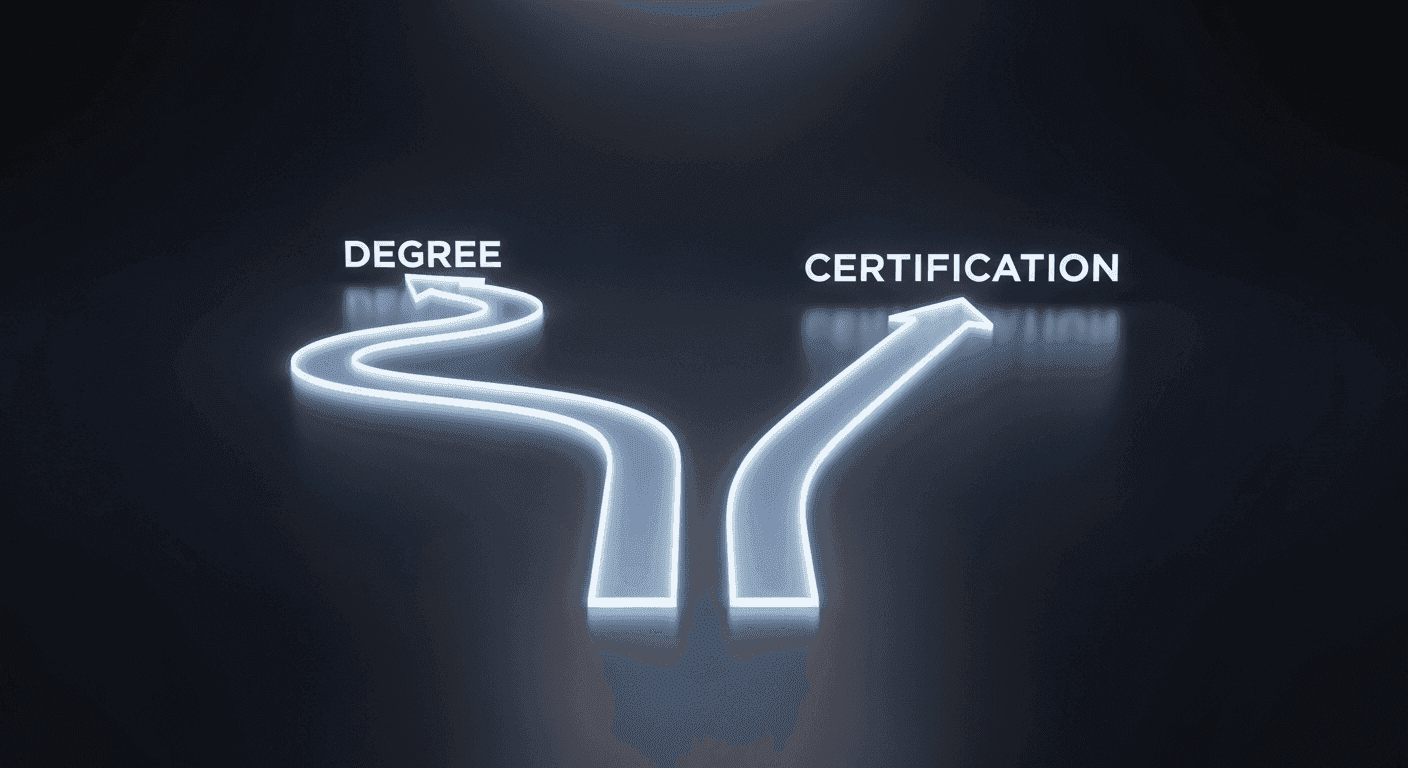
The world of online learning offers unprecedented access to knowledge and skill development. From quick courses to multi-year programs, the options can feel overwhelming. Two of the most common pathways are online degrees and certifications, each promising to advance your career and expand your capabilities. But how do you choose the right one for your unique ambitions and current professional standing?
Making an informed decision requires understanding the fundamental differences between these credentials, their respective benefits, and how they align with your long-term goals. It's not about which is inherently 'better,' but which is better suited to help you study smarter, borrow wiser, and move forward effectively in your chosen path.
Understanding the Fundamentals: What's the Difference?
At its core, an online degree—whether an associate's, bachelor's, or master's—is a comprehensive academic program. It provides a broad foundation of knowledge, critical thinking skills, and specialized expertise within a particular field. Degrees are typically offered by accredited colleges and universities, signifying a rigorous curriculum and adherence to established educational standards. They represent a significant investment of time and resources, often spanning several years of study.
In contrast, an online certification is a targeted credential that validates a specific skill set or competency. Certifications are often developed and offered by industry associations, technology companies, or specialized training providers. They are designed to be shorter in duration and highly focused, equipping learners with practical, immediately applicable skills for a particular role or technology. While some certifications require prior experience or a degree, many are accessible to individuals looking to quickly gain a new, in-demand skill.
When a Degree Lights the Way
An online degree is often the optimal choice when you're looking for a profound career transformation or aiming for roles that require extensive foundational knowledge and a broad understanding of a discipline. If you're entering a completely new industry, especially one with complex theoretical underpinnings, a degree provides the structured learning environment and comprehensive curriculum necessary to build a robust knowledge base from the ground up.
Furthermore, many professions, especially those in regulated fields like healthcare, engineering, or law, explicitly require a specific degree for licensure and practice. A degree also signals to employers a sustained commitment to learning, strong analytical abilities, and the capacity for long-term project completion. For those aspiring to senior leadership, management positions, or roles involving strategic planning and innovation, the critical thinking and problem-solving skills honed during a degree program are invaluable.
- You are making a significant career change into a new, complex field.
- Your long-term ambition involves senior leadership or management roles.
- Your desired profession requires a specific academic credential for licensure or entry.
- You seek a broad, foundational understanding of a subject, not just specific skills.
- You plan to pursue advanced academic research or a doctoral degree in the future.
The Strategic Power of Certification
Certifications shine when your goal is to enhance specific skills, validate existing expertise, or pivot within your current industry without committing to a multi-year program. They are ideal for professionals who need to quickly adapt to new technologies, master industry-specific software, or meet compliance requirements. For example, a project manager might pursue a Project Management Professional (PMP) certification to validate their skills and open doors to higher-level projects, or an IT professional might earn a cloud computing certification to specialize in a rapidly evolving platform.
Certifications demonstrate a focused commitment to professional development and can provide an immediate boost to your resume, making you more competitive for particular roles or promotions. They can also be an excellent way to bridge skill gaps, making you more versatile and valuable to your employer. Often, certifications are designed with direct input from industry leaders, ensuring the skills taught are directly relevant to current market demands.
Cost, Time, and Return on Investment (ROI)
When weighing your options, consider the investment in terms of both time and money. Degrees typically involve a substantial financial outlay for tuition, fees, and materials, spread over several years. They also demand a significant time commitment, often requiring many hours of study each week. The return on investment for a degree can be long-term, leading to higher earning potential over a career, access to a wider range of opportunities, and personal intellectual growth.
Certifications, on the other hand, usually have a lower upfront cost and a much shorter time commitment, often completed in weeks or months. Their ROI can be more immediate, as they can quickly lead to a raise, a new job, or increased job responsibilities. However, the scope of their impact might be narrower, focusing on specific skill-based advancements rather than broad career trajectories. It's crucial to research the market value and employer recognition of any specific certification you consider.
Making Your Decision: A Goal-Oriented Approach
The most effective way to choose between an online degree and a certification is to align your choice directly with your personal and professional ambitions. Start by asking yourself critical questions: What are your career goals for the next 1-5 years, and beyond? Do you need a broad knowledge base or a very specific skill? What are the requirements for the roles you aspire to? What is your current educational background and work experience? How much time and financial resources can you realistically commit?
Sometimes, the answer isn't one or the other, but a combination. Many professionals pursue a degree for foundational knowledge and then layer on certifications to stay current with industry trends or specialize further. Others might start with a certification to gain entry into a field and later pursue a degree to advance their career. The key is to view your educational journey as a strategic path, where each step, whether a degree or a certification, serves a clear purpose in moving you toward your ultimate destination.
Ultimately, both online degrees and certifications are powerful tools for personal and professional growth. By carefully evaluating your ambitions, the demands of your desired career path, and your available resources, you can make a choice that truly enables you to study smarter, borrow wiser, and confidently move forward in your career journey.
Sources & Further Reading
- How to Become a UX Designer: A Complete Guide — Interaction Design Foundation
- The Ultimate Guide to Choosing a UX Design Course — Interaction Design Foundation
- Online education — Wikipedia
- Professional certification — Wikipedia