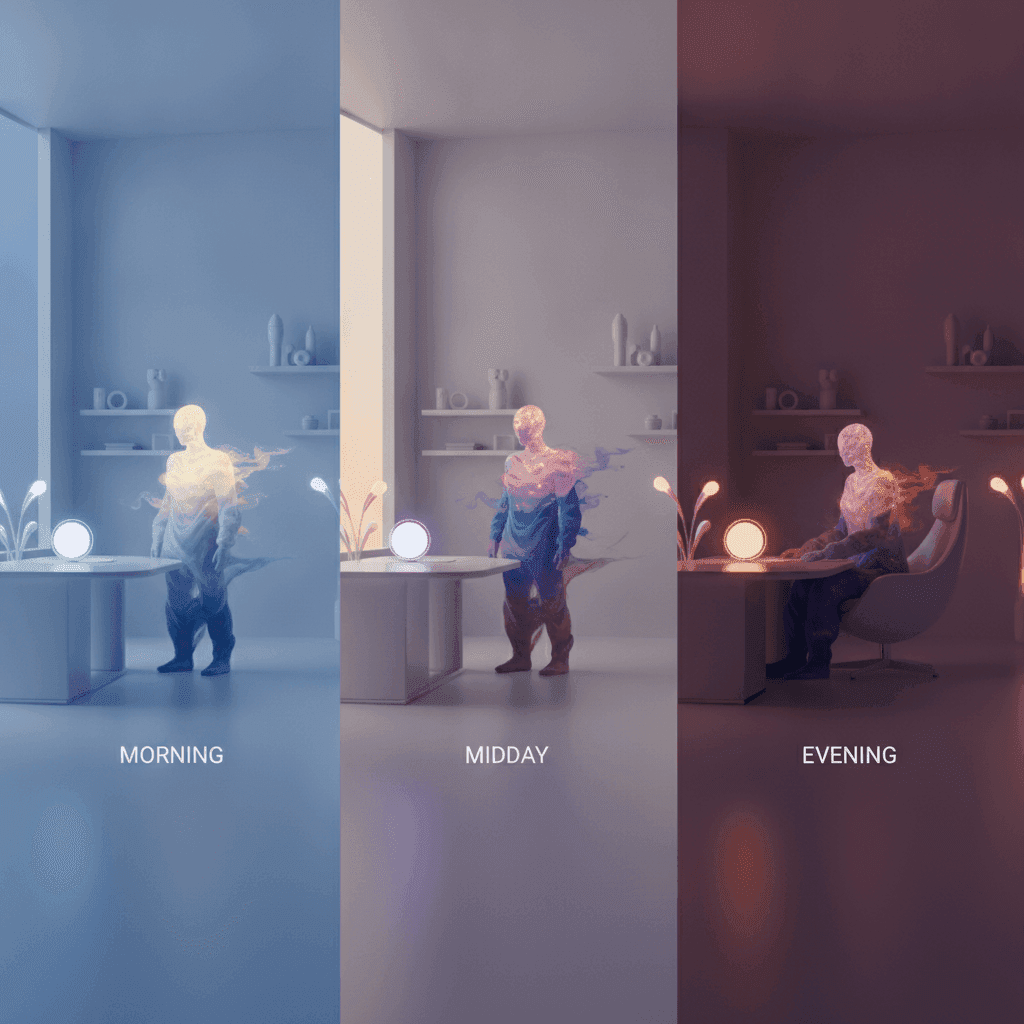
Self-paced learning offers incredible flexibility, allowing you to tailor your education to your unique life circumstances. Whether you're upskilling for a career change, diving into a new hobby, or tackling complex academic material, the freedom to set your own schedule is a significant advantage. However, this freedom also comes with the responsibility of designing a routine that is not only effective but also sustainable. Simply blocking out time on a calendar isn't enough; true progress comes from optimizing that time.
Many learners fall into the trap of forcing themselves to study during arbitrary hours, often leading to burnout, frustration, and diminished retention. A smarter approach involves understanding and leveraging your personal energy cycles. Just as the world operates on daily rhythms, your body and mind experience natural ebbs and flows in focus, creativity, and alertness. By aligning your study routine with these inherent cycles, you can transform your learning experience, making it more efficient, enjoyable, and ultimately, more successful. This article will guide you through practical strategies to identify your peak performance times and integrate them into a robust self-paced study plan.
Understanding Your Chronotype and Energy Rhythms
The first step in designing an energy-aligned study routine is to become a student of your own body. We all operate on an internal clock, or chronotype, which dictates our natural sleep-wake patterns and, consequently, our daily energy fluctuations. Are you a "morning lark" who thrives at dawn, a "night owl" who hits their stride after sunset, or somewhere in between, like a "hummingbird"? There's no right or wrong chronotype, but understanding yours is crucial for optimizing your learning.
Pay attention to when you feel most alert, focused, and mentally sharp, and conversely, when you experience dips in concentration or feel sluggish. For a few days, try tracking your energy levels informally. Note down when you feel most productive and when you struggle. This isn't about rigid adherence to a label but rather about gentle observation. You might find you have a peak in the morning, a slump post-lunch, and another surge in the late afternoon or evening. These observations will form the bedrock of your personalized study plan.
Mapping Your Learning Tasks to Your Energy Peaks
Once you have a clearer picture of your daily energy curve, the next step is to categorize your learning tasks by the mental energy they demand. Not all study activities are created equal. Deep work, such as grappling with complex mathematical problems, writing analytical essays, or learning new coding languages, requires peak cognitive function. Lighter tasks, like reviewing flashcards, organizing notes, or watching introductory lecture videos, can often be handled during periods of lower energy.
The goal is to align your most demanding study tasks with your highest energy periods. If you're a morning person, tackle that challenging chapter or complex project first thing. If your brain lights up in the late afternoon, reserve that time for intense problem-solving. Use your lower energy windows for administrative tasks, passive learning, or light review. This strategic allocation ensures you're maximizing your mental horsepower when it's most available, preventing burnout and enhancing comprehension.
Structuring Your Study Blocks with Breaks
Even during your peak energy times, sustained, unbroken concentration is difficult to maintain. Our brains are not designed for hours of relentless focus. Incorporating structured breaks is not a sign of weakness; it's a powerful strategy for sustaining energy and preventing cognitive fatigue. Think of your study sessions as sprints rather than marathons, punctuated by recovery periods.
A common and effective technique involves working in focused bursts, typically 25-50 minutes, followed by a short break. The key is to truly step away from your study material during these breaks. This allows your mind to rest, process information, and refresh itself for the next session. Longer breaks, around 15-30 minutes, can be strategically placed after 2-3 shorter cycles or during natural energy dips.
- Step away from your screen or study area completely.
- Engage in light physical activity, like stretching or a short walk.
- Hydrate or have a healthy snack.
- Avoid checking social media or emails, which can deplete mental energy.
- Practice a short mindfulness exercise or simply gaze out a window.
- Listen to a single song that helps you relax and reset.
Adaptability and Listening to Your Body
While designing a routine around your energy cycles is beneficial, it's crucial to remember that life is dynamic, and your energy levels won't always be predictable. Illness, stress, major life events, or even minor changes in your day can shift your internal rhythms. The goal isn't to create an unbreakable schedule but a flexible framework. Be prepared to adapt. If you wake up feeling unusually tired, don't force a high-intensity study session; opt for lighter tasks or reschedule.
Beyond daily fluctuations, your overall energy levels are profoundly impacted by fundamental lifestyle choices. Prioritizing consistent, quality sleep is non-negotiable for cognitive function and sustained focus. Similarly, nourishing your body with balanced meals and staying hydrated prevents energy crashes. Regular physical activity, even moderate exercise, has been shown to boost alertness and improve mood, making your study sessions more effective. Viewing these habits not as optional extras but as integral components of your study strategy will yield significant returns.
Tools and Techniques for Tracking and Optimizing
You don't need fancy gadgets to track your energy; a simple notebook, a digital calendar, or a basic spreadsheet can suffice. The act of noticing and logging your peak and dip times, along with the tasks you performed, will provide valuable data. After a week or two, review your observations. Are there patterns? Do certain types of tasks consistently drain you more than others? Use this feedback to continuously refine your schedule. This is an iterative process, not a one-time setup.
Remember that optimizing your study routine around personal energy cycles is a journey of self-discovery. It requires patience, observation, and a willingness to experiment. There will be days when your carefully planned schedule goes awry, and that's perfectly normal. Approach yourself with self-compassion. The aim is not perfection but progress – to create a learning environment that respects your natural rhythms, fostering greater engagement, efficiency, and ultimately, deeper understanding. By studying smarter and borrowing wiser from your own internal wisdom, you can truly move forward in your educational pursuits.
Sources & Further Reading
- Circadian rhythm — Wikipedia
- Cognitive Load — Interaction Design Foundation
- Habit Formation — Interaction Design Foundation
- Spaced repetition — Wikipedia